


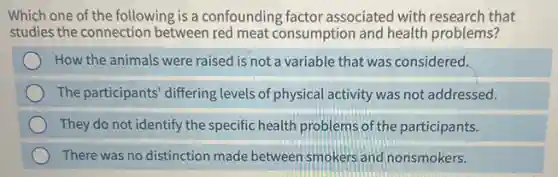
Which one of the following is a confounding factor associated with research that studies the connection between red meat consumption and health problems? How the animals were raised is not a variable that was considered. The participants' differing levels of physical activity was not addressed. They do not identify the specific health problems of the participants. There was no distinction made between smokers and nonsmokers.
Solution4.2(252 votes)
Answer
Explanation
Similar Questions
True or False Question Avoidance is an effective strategy to use with conflict. True False
What is the focus of Cognitive therapy? To improve social relationships To gain insight To change the client's thoughts To change feelings
The common thread among great leaders is the ability to read people and __ Determine what is best for them Develop a sense of responsibility and moral character Develop their loyalty and mutual trust Use the leadership style that will effectively communicate orders
This refers to an innate drive to take up and defend spaces: A. territoriality B. environmental factors C. chronemics D. proxemics
The anxiety disorder that is similar to PTSD, but describes a disorder that lasts between three days and one month of a traumatic event, is referred to as acute stress disorder. obsessive-compulsive disorder. agoraphobia. generalized anxiety disorder.
Imogene's afternoon routine usually involves a few hours of TikTok after they get off work. They follow several influencers and find themself on a website purchasing a product that one of these influencers made a video about.Which of the following is Imogene experiencing? A need Consumer behavior Internal stimuli External stimuli
Isabella likes to meet with her friends in a park every morning for work to practice some yoga poses. She finds that it loosens her up and gets her ready for the day. Even though her yoga may include more than one form of exercise, which type of exercise is Isabella LEAST likely getting during these sessions? endurance exercise strength training balance exercise flexibility training
1. A conscious ; or unconscious reminder of a past trauma . that results in a re -experiencing of the initial trauma , event is known as __ A. Trigger B. Secondary 'Trauma C. Retraumatization D. None of these
Question 4 of 10 Mental illness is: A. very rare. B. found in only 1 out of 100 adults. C. seen usually only in large metropolitan areas. D. common.
Which of the following is the best way for Lusa to encourage Ned to promptly reply? Select an option from the choices below and click Submit. I don't have all day, Ned. Ned, are you still there? Hey,Ned! He's going to be here in less than an hour. Is that enough time?